About us
Data competency from the beginning!
Section EduTrain emphasizes the relevance of building data literacy in all areas of research and university teaching and paves the way for interdisciplinary sustainability in research data management (RDM) and the development of a modern data culture.
“Data literacy from the outset” has become a paradigm for comprehensive digital transformation processes. These encompass the following
- Further development of scientific methods and good scientific practice.
- Establishment and improvement of data quality as a resource for value-adding knowledge gain and sustainable solutions to societal challenges.
- Development of a better understanding of data for more efficient, sustainable, and interdisciplinary reuse.
An important prerequisite for this is compliance with the “FAIR” principles and ensuring accessibility, transparency, and reusability in both open and protected data rooms at national and European level.
Section Report 2021-2025: https://doi.org/10.5281/zenodo.19052593
Goals
The coordinated, needs-based, and targeted teaching of data literacy is of great importance for the competitiveness of Germany as a center of science and research. In the EduTrain section, stakeholders from university teaching and research, libraries, and computer centers, as well as from non-university research institutes and state initiatives, work closely together to promote cultural change toward FAIR data.
Goals of the section are:
- Creation of a common platform for teaching materials as a knowledge base (see DALIA)
- Teaching data literacy and FAIR concepts at all levels of education and expertise: bachelor’s, master’s, PhD, postdoc, data stewards, professors
- Development of generic, institutional, and discipline-specific train-the-trainer concepts and FDM content
- Definition of competency parameters for the implementation of domain-specific courses offered by the NFDI consortia
Involvement of other stakeholders such as professional associations, industry, etc.
Working Groups
Schalter (ausgeblendet)
Schalter, damit darauffolgendes Element ausklappbar ist.
Target group and needs analysis
Target group and needs analyses are carried out in dialogue with all NFDI consortia and other relevant stakeholders and through workshops on requirements analysis, e.g., for the various skill levels (from students to professors) and the various areas of responsibility (researchers, computer centers, libraries). By bringing together and comparing these analyses, similarities and differences will be identified, including with regard to research methods, data types, and motivators.
Contact person: Britta Petersen
Link to Charta: https://zenodo.org/record/6478698
Publications:
Lernzielmatrix zum Themenbereich Forschungsdatenmanagement (FDM): https://zenodo.org/records/15025246
Shaping User Personas for NFDI Section Training & Education and DALIA. Consolidated Personas: https://zenodo.org/records/15744271
Shaping User Personas for NFDI Section Training & Education and DALIA. Original Workshops Miroboards: https://zenodo.org/records/15744172
Inventory of Materials
The training courses and materials are already available, but they are usually only known to or accessible to a small group of people (e.g., the Train-the-Trainer concept for FDM or Carpentries materials). In this task package, such offerings are to be found within the consortia, reviewed, made usable (in accordance with the FAIR principles), and brought together. In doing so, classification metrics based on target group profiles and educational goals are to be developed and form the basis for the modular concept. In addition to the involvement of all NFDI consortia, communication with initiatives outside the NFDI is essential in order to further disseminate and make usable their offerings (e.g., the FDM state initiatives or the data competence centers).
Contact person: Jonathan D. Geiger
Link to Charta: https://zenodo.org/record/6478698#.YrYnkezP1PZ
Publications:
DALIA in a Nutshell: https://doi.org/10.5281/zenodo.14925209
DALIA – A Platform for the Provision of Teaching and Training Contents in Data Literacy: https://doi.org/10.5281/zenodo.17543968
DALIA Use Cases and User Stories: https://doi.org/10.5281/zenodo.17494628
DALIA Interchange Format:https://zenodo.org/records/17871138
The Revised DALIA Interchange Format – New Picklists for Describing Open Educational Resources: https://doi.org/10.5281/zenodo.17424236
Development of a modular and scalable concept
Aim of this task package is to develop and implement a common modular and scalable concept based on target group profiles and educational goals. The generic competence and knowledge canon will be modularized for the different target groups (e.g., data stewards, students, doctoral candidates). This approach will enable the modules to be subsequently tailored to specific disciplines. The evaluation will take place in AP6. Furthermore, guidelines and good practices for the implementation of data literacy in curricula will be compiled and developed.
Contact person: Timo Mühlhaus
Link to Charta: https://zenodo.org/record/6478698
Publications:
EduBricks – Ein Konzept für modulares und skalierbares Lehrmaterial: https://zenodo.org/records/17850103
Development of shared, multidimensional teaching materials and establishment of a knowledge base
The central element of this section is a comprehensive range of event formats and teaching materials on FDM and data literacy in general, which covers both interdisciplinary and disciplinary needs in a way that is tailored to the target audience. These include slide sets for local multipliers, videos, hands-on formats, materials for on-site events, learning modules (e.g., online courses), information on conference contributions, “regulars’ tables,” newsletters, and help desks. To simplify the search for suitable materials, the knowledge base will be linked to a query wizard whose queries are based on the characteristics of the target group profiles and offer filter options for the metadata of the materials. In the long term, a methodological and technological solution will be provided to present the contents of the FAIR consortia in accordance with NFDI.
Contact persons: See project DALIA
Link to Charta: https://zenodo.org/record/6478698
Training formats and certificate course
In addition to openly providing teaching materials in the Knowledge Base, we will also offer more formalized training in the form of certificate courses for data stewards, for example. For many stakeholders, it is not only important to acquire data literacy as a meta-competence, but they also want to have this acquired competence confirmed by external and recognized bodies. Certificate courses also ensure comparable and consistent quality in the training courses.
Contact persons: Konrad Förstner, Birte Lindstädt
Link to Charta: https://zenodo.org/record/6478706
Quality assurance and evaluation
A quality assurance concept for the course offerings will be developed in close coordination with the needs analysis. This is intended to motivate authors to regularly reflect on whether the course offerings need to be adapted or updated due to changing needs. Users should be offered low-threshold feedback options in order to evaluate the suitability for the target group and the usage. In line with a train-the-trainer concept, low-threshold opportunities for collaboration should also be provided so that individuals can actively improve the specific components they use. In this way, the practical experience of users and the respective target group can be leveraged.
Contact persons: see DALIA
Link to Charta: https://zenodo.org/record/6478698
Networking and Outreach
Intensive networking at national and international (European) level will contribute to the harmonization of training and education on FDM content and competencies.
Contact person: Jana Neumann
Dealing with errors in science
Feedback from the scientific community shows that scientists are somewhat reluctant to publish data because they fear that errors in their data or scientific work could be discovered. In industry and medicine, so-called “no-blame cultures” have already been implemented in areas of work where mistakes can have serious consequences, making teams feel safe without fear of blame, criticism, and loss of professional reputation. Unfortunately, this is lacking in other areas. There is a need to understand the concrete impact of mistakes on researchers and the organizational culture in science.
Contact persons: Bernhard Miller, Theo Bender, Maximilian Frank
Link zur Charta: https://zenodo.org/records/6475492
Publications:
Error needs culture: https://zenodo.org/records/17871138
RDM-Helpdesk
Our goal is to connect the helpdesk teams of the NFDI consortia with the helpdesk teams of the institutions so that all users can find and receive optimal support for their FDM needs. This requires collaboration between FDM helpdesk teams from different institutions and disciplines in order to share experience and knowledge about FDM infrastructure and workflows, best practices, and specific use cases for consulting and documentation.
Contact persons: Martha Stellmacher, Marcus Schmidt, Judith Engel. Marina Lemaire
Link to Charta and further information:
https://zenodo.org/records/6478698
https://www.nfdi.de/section-edutrain/working-group-rdm-helpdesk-network/
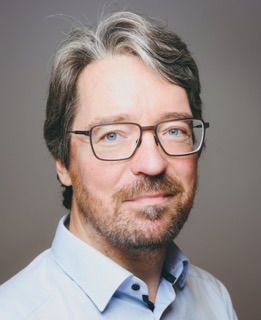
Speaker: Dr. Jens Dierkes
(Universitäts- und Stadtbibliothek Köln, Universität zu Köln)
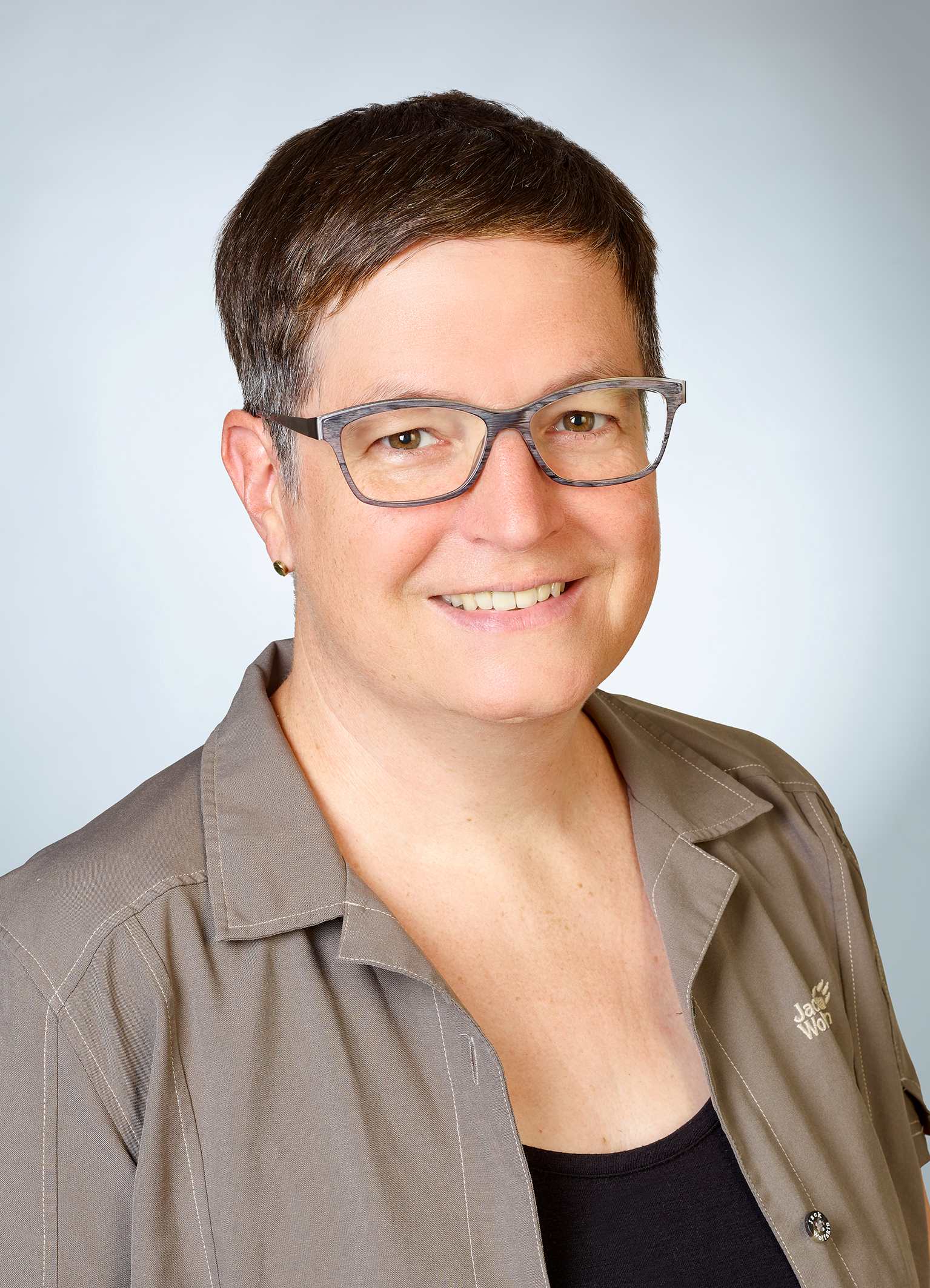
Deputy speaker: Dr. Nanette Rißler-Pipka
(Max Weber Stiftung – Deutsche Geisteswissenschaftliche Institute im Ausland, Bonn)